
How to use betting simulations for practice
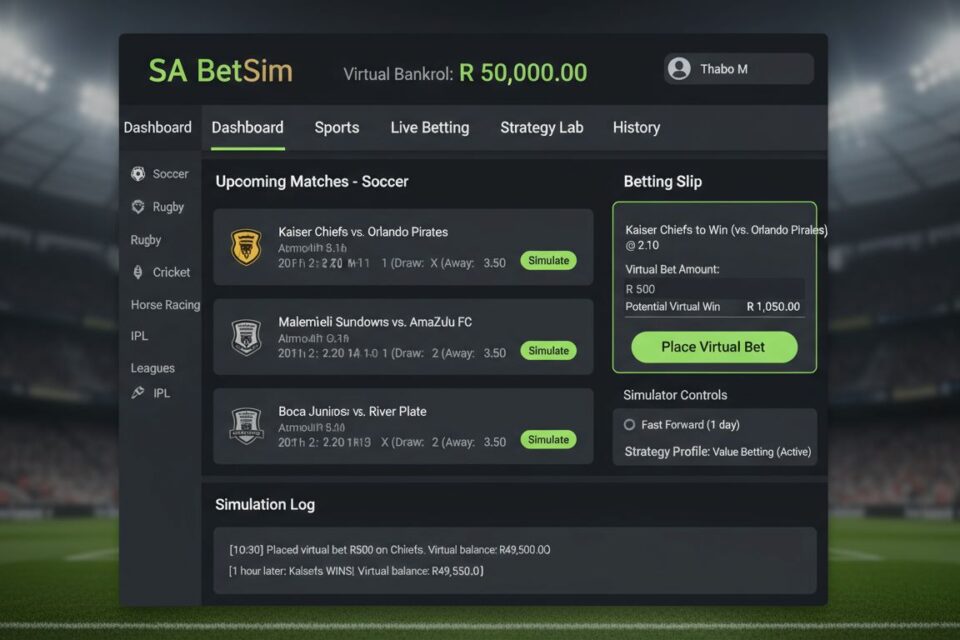
Betting simulations offer South African punters a valuable opportunity to hone their skills without risking real money. These sophisticated training tools allow you to practice on virtual sports events, simulated reality leagues, and casino games while developing crucial betting strategies in a completely risk-free environment.
Modern betting simulators go far beyond simple practice games, incorporating historical data, realistic odds movements, and authentic market conditions that mirror real-world betting scenarios. Advanced simulations enable you to test complex strategies, refine your bankroll management techniques, and build confidence before transitioning to live betting with actual funds.
Why Practice with Betting Simulations?
Understanding the advantages of betting simulations helps South African punters make informed decisions about incorporating these tools into their betting education. Professional bettors and beginners alike benefit from the comprehensive learning environment that simulators provide.
The risk-free nature of betting simulations allows you to experiment with different strategies, test bankroll management approaches, and develop analytical skills without the pressure of potential losses. These tools serve as invaluable stepping stones before committing real money to betting activities.
Betting simulations function as comprehensive training grounds where you can refine your decision-making processes and understand market dynamics. The ability to practice repeatedly with various scenarios builds the foundation for successful real-money betting strategies.
Modern simulators offer sophisticated features that closely replicate actual betting environments, providing authentic learning experiences that translate directly to real-world applications.
| Advantage | Description |
|---|---|
| Risk-Free Learning | Practice betting strategies without financial consequences or emotional pressure |
| Bankroll Management Testing | Experiment with staking plans and money management systems safely |
| Strategy Refinement | Test and adjust betting approaches based on simulated results |
| Market Familiarity | Learn different bet types and markets without real money exposure |
| Statistical Analysis | Build skills in interpreting data and identifying value opportunities |
| Confidence Building | Develop decision-making abilities through repeated practice sessions |
Limitations of Betting Simulations
While betting simulations provide excellent learning opportunities, they cannot perfectly replicate every aspect of real-money betting. Understanding these limitations helps set realistic expectations and ensures you supplement simulation practice with other learning methods.
The absence of real financial risk means simulators cannot fully prepare you for the emotional aspects of betting with actual money. Psychological factors like anxiety, excitement, and pressure play significant roles in real betting scenarios.
Some simulators may not accurately reflect current market conditions, odds movements, or bookmaker behaviors that you’ll encounter in live betting environments.
- Lack of genuine emotional pressure and psychological stress that accompanies real money betting
- Potential discrepancies between simulated odds and actual bookmaker pricing
- Simplified market conditions that may not reflect real-world complexities
- Risk of developing overconfidence due to unrealistic simulation parameters
- Limited social and external factors that influence real betting decisions
Who Should Use Simulators?
Betting simulators serve different purposes for various types of bettors, from complete beginners to experienced professionals seeking to test new strategies. Newcomers to sports betting benefit enormously from simulation practice, as these tools provide comprehensive introductions to betting concepts, market types, and strategic thinking without financial risk.
Experienced bettors use simulators to test new systems, validate theoretical approaches, and refine advanced strategies before implementing them with real money. Risk management professionals and betting analysts also utilize sophisticated simulators for creating and testing mathematical models and variance reduction techniques.
Overview of Betting Simulation Types Available in SA
South African punters have access to various betting simulation types, each offering unique features and learning opportunities. Virtual sports simulations provide fast-paced betting action on computer-generated events, while Simulated Reality League (SRL) uses real player data to create authentic football matches.
Casino game simulators allow practice on slots, table games, and live dealer options without real money stakes. Dedicated sports betting simulators focus specifically on odds analysis, strategy testing, and bankroll management across multiple sports and markets.
The diversity of available simulation types ensures that South African bettors can find tools suited to their specific interests and skill development needs. Each simulation type offers distinct advantages for different aspects of betting education and strategy development.
| Simulation Type | Platform/Example | Core Features | Unique for SA |
|---|---|---|---|
| Virtual Sports | Betway Virtual | RNG-based events, multiple sports, continuous betting | Popular during rugby/cricket off-seasons |
| Simulated Reality League | SRL Premier League | Real player data, authentic team statistics | Matches PSL timing and familiar teams |
| Casino Simulators | Demo Mode Games | Free play, all game types, no deposits | Available in ZAR currency settings |
| Betting Tools | Odds calculators | Strategy testing, bankroll simulation | Integrated with local bookmaker odds |
| Fantasy Sports | SuperDraft SA | Player selection, salary caps, tournaments | Features Springboks and Proteas players |
| Paper Trading | Betting journals | Manual tracking, performance analysis | Customizable for local sports preferences |
Legal and Safe Use of Betting Simulations
Betting simulations operate within legal boundaries in South Africa since they don’t involve real money wagering. Licensed operators often provide demo modes and practice tools as part of their regulated services, ensuring safe and compliant usage for educational purposes.
Most reputable platforms offer free trial versions of their betting tools, allowing you to explore simulation features without registration or deposits. These legitimate options provide the safest environment for learning while avoiding unlicensed or potentially fraudulent simulation providers.
Step-by-Step Guide: Getting Started with Simulated Betting
Beginning your betting simulation journey requires a systematic approach to maximize learning outcomes. Proper setup and strategic practice sessions form the foundation for translating simulation experience into real-world success.
The initial setup process involves selecting appropriate platforms, configuring realistic parameters, and establishing clear learning objectives. Taking time to properly organize your simulation environment pays dividends throughout your practice sessions.
Consistent practice with methodical record-keeping transforms casual simulation use into serious skill development. Treating simulated betting with the same discipline as real betting builds the habits necessary for long-term success.
Progressive complexity in your simulation practice helps build confidence while gradually introducing advanced concepts. Starting simple and expanding your scope ensures solid foundation development before tackling sophisticated strategies.
Regular evaluation of your simulation results provides insights into areas needing improvement and confirms successful strategy elements worth implementing in real betting scenarios.
- Research and select reputable simulation platforms that offer the betting types most relevant to your interests and goals
- Create demo accounts or access free modes on chosen platforms, ensuring you understand all available features and tools
- Set up a realistic virtual bankroll amount that reflects what you might actually bet with, maintaining proper money management principles
- Choose initial betting markets and sports that align with your knowledge and interests, avoiding overcomplication during early practice
- Establish a systematic record-keeping method to track your simulated bets, results, and strategy adjustments over time
- Begin with simple bet types and gradually introduce more complex wagering options as your confidence and understanding grow
- Schedule regular practice sessions and treat them seriously, maintaining the same discipline you would use with real money betting
Tips to Maximise Your Practice Sessions
Effective simulation practice requires strategic planning and disciplined execution. Approaching your practice sessions with clear objectives and systematic methods accelerates skill development and ensures maximum benefit from your time investment.
Detailed tracking of your simulation activities provides valuable data for identifying patterns, weaknesses, and successful strategies. This analytical approach transforms casual practice into serious skill development.
Varying your practice scenarios and testing different variables helps build adaptability and prepares you for the diverse situations encountered in real betting environments.
- Maintain detailed records of all simulated bets including reasoning, outcomes, and lessons learned for comprehensive performance analysis
- Test different bankroll management strategies and staking plans to find approaches that suit your risk tolerance and goals
- Practice betting discipline by setting strict limits and rules, then adhering to them consistently throughout simulation sessions
- Vary betting scenarios by trying different sports, markets, and time frames to build comprehensive experience
- Focus on identifying value opportunities rather than just picking winners, developing the analytical skills needed for profitable betting
- Schedule regular review sessions to analyze your simulation data and adjust strategies based on performance patterns
Common Pitfalls When Using Simulators
Awareness of common simulation mistakes helps you avoid developing bad habits that could prove costly when transitioning to real money betting. These pitfalls often stem from the artificial nature of simulation environments and require conscious effort to avoid.
The psychological differences between simulation and real betting can lead to overconfidence and unrealistic expectations. Maintaining awareness of these limitations helps you make more accurate assessments of your true betting abilities.
- Betting with unrealistically large stakes that you couldn’t afford with real money, creating false confidence in high-risk strategies
- Ignoring variance and short-term results, leading to premature strategy changes or overconfidence after lucky streaks
- Becoming emotionally detached from losses since no real money is at risk, failing to develop proper psychological preparation
- Treating simulations as games rather than serious practice, resulting in careless decision-making and poor habit formation
- Relying solely on simulation success without understanding the underlying reasons for profitable outcomes
Comparing Popular Simulation Platforms in South Africa
South African punters have access to numerous simulation platforms, each offering distinct features and advantages. Understanding the strengths and limitations of available options helps you select the most suitable tools for your specific learning needs and betting interests.
Platform comparison involves evaluating factors such as simulation accuracy, available markets, user interface quality, and compatibility with local betting preferences. The most effective approach often involves using multiple platforms to gain diverse experience and perspectives.
Device compatibility plays a crucial role in platform selection, especially for South African users who frequently access betting services via mobile devices. Ensuring your chosen simulation tools work seamlessly across different devices maximizes practice opportunities.
Different platforms excel in various areas, from comprehensive sports coverage to advanced analytical tools. Identifying which features align best with your learning objectives helps prioritize platform selection and optimize your simulation experience.
| Name | Type | Key Features | Device | Best For |
|---|---|---|---|---|
| Betway Virtual Sports | Virtual Sports | 24/7 betting, multiple sports, demo mode | Mobile & Desktop | Continuous practice, market familiarity |
| SRL Simulators | Simulated Reality | Real data integration, authentic teams | Mobile & Desktop | Football strategy development |
| Betting Calculator Pro | Analysis Tool | Odds analysis, profit calculation, simulations | Mobile Apps | Mathematical strategy testing |
| Demo Casino Games | Casino Simulation | Free play modes, all game categories | Cross-platform | Casino game learning |
| Excel Betting Models | Manual Simulation | Custom formulas, historical testing | Desktop | Advanced system development |
| Fantasy Sports Apps | Skill-based Gaming | Player analysis, salary management | Mobile Focused | Player evaluation skills |
Criteria for Choosing the Best Simulator
Selecting the optimal betting simulator requires careful evaluation of multiple factors that directly impact your learning experience. The most important considerations include the accuracy of simulated data, breadth of available markets, and the overall user experience quality.
Cost considerations play a significant role, especially for beginners who may prefer free options before investing in premium simulation tools. However, the quality and comprehensiveness of features often justify the expense of paid platforms for serious strategy development.
Integration capabilities with real bookmaker odds and the ability to export data for analysis can significantly enhance the value of simulation platforms for advanced users developing sophisticated betting strategies.
- Statistical accuracy and realistic odds that closely mirror actual betting market conditions and movements
- Comprehensive market coverage including your preferred sports and bet types for relevant practice experience
- Intuitive user interface design that facilitates easy navigation and efficient practice session management
- Free trial options or demo modes that allow thorough evaluation before committing to paid subscriptions
- Data export capabilities for detailed analysis and integration with external analytical tools and methods
- Regular updates and maintenance ensuring continued accuracy and compatibility with current betting market conditions
Advanced Strategies: Using Simulators to Test Betting Systems
Sophisticated betting simulators enable testing of complex mathematical systems and advanced strategies that would be too risky to experiment with using real money. These tools provide ideal environments for validating theoretical approaches and refining systematic betting methodologies.
Value betting strategies benefit enormously from simulation testing, allowing you to identify and exploit inefficiencies in odds pricing across thousands of virtual events. This extensive practice builds the pattern recognition skills essential for spotting genuine value opportunities in live markets.
Monte Carlo simulation techniques can be applied within betting simulators to understand variance, probability distributions, and long-term expected outcomes of different betting strategies. This mathematical approach provides statistical confidence in strategy viability.
Advanced bankroll management systems, including the Kelly Criterion and modified staking plans, require extensive testing to optimize parameters for individual risk tolerance and betting styles. Simulators provide safe environments for this crucial optimization process.
- Value betting system development through extensive odds analysis and historical backtesting across multiple sports and markets
- Progressive staking plan testing including Kelly Criterion optimization and variance reduction techniques for consistent profitability
- Monte Carlo analysis implementation for understanding probability distributions and long-term expected outcomes of betting strategies
- Arbitrage opportunity identification and execution practice across multiple bookmaker interfaces and market conditions
- Hedge betting strategy development for risk mitigation and guaranteed profit scenarios in complex multi-leg wagers
- Statistical significance testing to determine minimum sample sizes needed for confident strategy validation and implementation
Interpreting Simulation Results: What to Watch
Proper analysis of simulation results requires understanding key performance metrics beyond simple win-loss records. Return on Investment (ROI), strike rate consistency, and variance patterns provide deeper insights into strategy effectiveness and long-term viability.
Variance analysis helps distinguish between skill-based profits and random fluctuations, ensuring you don’t mistake luck for successful strategy development. Understanding these statistical concepts prevents premature conclusions about strategy effectiveness.
Long-term trend identification requires sufficient sample sizes and systematic data analysis to separate genuine edge from statistical noise. Professional simulation analysis demands the same rigor applied to real betting performance evaluation.
- Calculate and track your ROI percentage over meaningful sample sizes to assess true strategy profitability beyond short-term results
- Analyze variance patterns and drawdown periods to understand the emotional and financial stress your strategy might create
- Identify winning and losing streaks to prepare psychologically for the natural fluctuations inherent in any betting system
- Compare results across different sports, bet types, and market conditions to identify your most profitable niches and specializations
- Adjust strategy parameters based on data-driven insights rather than emotional reactions to recent results or perceived patterns
Case Study: Practising Value Betting in Virtual Leagues
The Simulated Reality League provides an excellent testing ground for value betting strategies, combining real player statistics with consistent match scheduling that enables systematic analysis. By practicing value identification in SRL matches, you develop skills directly transferable to live football betting while building confidence in your analytical approach.
Successful SRL value betting practice involves comparing simulated odds against calculated probabilities based on team form, player availability, and historical performance data. This process mirrors real-world value betting but provides unlimited practice opportunities without financial risk, making it ideal for strategy refinement and confidence building.
From Practice to Real Bets: Transition Tips for South African Punters
Transitioning from simulation to real money betting requires careful planning and gradual implementation to avoid common pitfalls that plague inexperienced bettors. The psychological shift from risk-free practice to actual financial stakes demands preparation and realistic expectations about initial performance.
Starting with minimal stakes allows you to experience the emotional aspects of real betting while limiting potential losses during your adjustment period. This conservative approach helps bridge the gap between simulation confidence and real-world performance.
Successful transition strategies emphasize continuity in record-keeping, analysis methods, and decision-making processes developed during simulation practice. Maintaining these systematic approaches helps preserve the discipline and analytical rigor that simulation practice instilled.
- Begin with small stakes representing only 1-2% of your total betting bankroll to minimize emotional pressure while gaining real money experience
- Transfer proven bankroll management techniques directly from simulation practice, maintaining the same discipline and systematic approach
- Monitor emotional responses to wins and losses carefully, as these psychological factors don’t exist in simulation environments
- Maintain detailed records using the same tracking methods developed during simulation practice for consistent performance analysis
- Expect initial performance variations as you adjust to real betting pressure and gradually increase stakes only after consistent profitability
- Continue using simulation tools for testing new strategies while implementing only proven approaches with real money
Ongoing Learning: Analytics, Responsible Gambling, and Continuous Testing
Successful betting requires commitment to continuous improvement through ongoing education, regular strategy testing, and maintaining responsible gambling practices. Simulation tools remain valuable throughout your betting journey for testing new ideas and refining existing strategies without risking established bankrolls.
Regular performance analysis combined with responsible gambling limits ensures long-term sustainability and enjoyment of betting activities. Treating betting as a skill-based activity requiring constant learning and adaptation helps maintain realistic expectations and prevents problem gambling behaviors from developing.